Hold an animal. Capy rolls. The Pot buys and burns.
Zoopoly is a live 3D board game on Solana where eight animals are eight memecoins. Every trade on any of them feeds one shared Pot. Every couple of minutes a golden capybara rolls the die, walks the board, and the whole Pot buys and burns the animal she lands on. There is no winner and no end. The game just keeps rolling.
In 60 seconds
- 1Nine coins launch together$ZOOPOLY, the central coin, plus eight animals: $CATZ, $DOGZ, $APEZ, $FROGZ, $PENGUZ, $WHALEZ, $BEARZ and $BULLZ. Each animal is one tile on the board.
- 2Every trade pays into the PotCreator fees from all nine coins are collected by the robot. 45% goes into the Pot, 40% burns $ZOOPOLY, the rest keeps the lights on. Sponsor payments and bet rakes top it up too.
- 3Capy rollsAbout every two minutes the robot rolls a 1 to 6 with a committed seed and Capy hops that many tiles clockwise.
- 4Land on an animal: buy and burnThe entire Pot market-buys that animal and burns it. 80% goes to the animal she landed on, 20% to its tribe partner. Land on a corner and nothing is bought; the Pot rolls over and the next hit is bigger.
- 5Repeat foreverNo finish line, no champion. Later phases add NFT card drops to holders, sponsor strips on the table, and 1v1 prediction rooms.
The island
Somewhere past the last chart on the last screen there is a square island. Nobody remembers who cut it that shape. Four shores, four tribes, and in the exact middle a plaza of pale sand where a vault sits on a ring of gold.
The vault is the Pot. It fills on its own, drip by drip, from every trade anyone makes on any of the island's coins. It never opens for a person. It opens only for a die.
The island is small enough to see all at once, the way you see a diorama on a table: a jungle of mossy ruins and a waterfall on the left, a cold bright ocean with a striped lighthouse at the back, a financial district of art deco towers on the right, and a cheerful city street with a pet shop, a food truck and a ferris wheel at the front, closest to you. Around all of it runs the board: twelve tiles in a ring, and a golden capybara walking them.
Between the tribes, at three of the four corners, hot springs steam quietly. Animals from every shore go there to soak and to argue about the last roll. The fourth corner is START, the pier where Capy first stepped onto the island and where every lap begins again.
Why animals fight over a die
Each tribe wants Capy to land on its shore, because when she does, the vault empties into that tribe's coin and burns it. Supply goes down, holders cheer, and the tribe partner gets a cut too. So the island lives in a permanent state of friendly panic: eight animals watching one capybara, every two minutes, forever.
Nobody controls the die. Not the tribes, not the team, not the robot that rolls it. The seed is committed before the roll and revealed after, so any animal with a block explorer can check that the hop was honest.
Capy, the golden capybara
Capy is the pawn and the mascot. She is not a coin and never will be. She is made of gold, walks clockwise, and has never once been in a hurry.
The lore says she washed up at the pier with a single die in her mouth. The tribes tried to bribe her, then tried to bet on her, then gave up and built a board around her path. She has been walking that path ever since. When she lands on an animal, she sits for a moment while the Pot does its work, then stands up and waits for the next roll.
- She is neutral. Capy has no tribe and no ticker.
- She never decides. The robot rolls, Capy walks. On the board she is the visible half of the round.
- She never stops. There is no last round and no season finale for her. Seasons change the island; Capy keeps walking.
The four tribes
Each side of the island is one tribe, and each tribe is two animals who share a shore and a cut of every buyback that hits either of them. Tribe mates are partners, not rivals: when one gets bought, the other gets 20% of the Pot.
A bright low-poly city block: pet shop with a bone over the door, two townhouses, a food truck, a bus, an ice cream cart, a fountain and a ferris wheel that actually turns. The tribe of regular folks, alleys and rooftops. Loud, loyal and always hungry.
Mossy stone ruins, a waterfall, palms and a pond of lily pads. The old part of the island, older than the board. The Jungle tribe believes the ruins were built by whoever cut the island square, and that the temple knows how the die will land.
Icebergs, a striped lighthouse, a wooden pier and a buoy that never stops bobbing. Cold water, warm tribe. Penguins run the lighthouse; the whale is the biggest thing on the island and the calmest.
A stock exchange with square pillars, a green art deco tower, a glass tower, taxis, an armored truck full of coins and a ticker that never sleeps. The only tribe where the two partners disagree about everything except the Pot.
The eight animals
Every animal is one memecoin, one tile on the board, one 3D piece standing on that tile, and one deck of 15 NFT cards. The portraits below are the same characters that stand on the board. Three sample commons, two rares and the legendary are listed for each; the full decks are on the NFTs page.
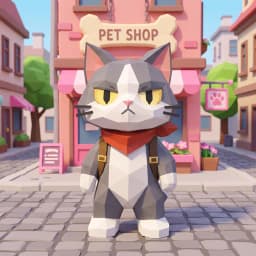
Cat $CATZ
Streets tribe. The alley scout, the rooftop napper, the fish-market thief. Nobody on the island knows exactly where the cat lives, and the cat prefers it that way. Believes it has nine lives and has so far used none of them on a bad trade.

Dog $DOGZ
Streets tribe. Skateboards down the sidewalk, begs at the hot dog stand, rides the ferris wheel with its tongue out. The most loyal holder on the island. Will not sell, will not stop wagging, will absolutely eat your lunch if you leave it on the bench.

Monkey $APEZ
Jungle tribe. Swings the vines, tosses coconuts, drums on the ruins and takes selfies at the waterfall. Guardian of the temple, or so it claims. Loud, fast, and convinced every roll is going to land on the Jungle.
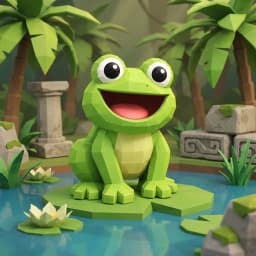
Frog $FROGZ
Jungle tribe. Sits on the lily pad, catches flies, calls the storms and reads the ruins. The quiet one of the island. Sages say the frog knows the next roll and simply doesn't care.

Penguin $PENGUZ
Ocean tribe. Keeper of the lighthouse, belly-slider, ice fisher, surfer when the swell is right. Wears a bow tie to the hot springs. Huddles with the whole tribe when the Pot gets big and the roll gets close.

Whale $WHALEZ
Ocean tribe. The blue giant. Breaches at sunset, blows bubble rings, visits the pier when the seagulls let it. The biggest bag on the island and the least worried about it. When the whale spouts, everyone looks up.

Bear $BEARZ
Wall Street tribe. Red candles, capitulation, a honey pot on the desk and a coffee that went cold three charts ago. The bear hibernates through green markets and wakes up exactly when you least want it to. Stands on the right of the exchange steps.
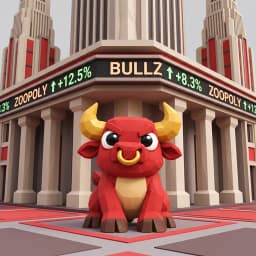
Bull $BULLZ
Wall Street tribe. Green candles, horns up, champagne on the rooftop and a sports car it can't park. Rings the bell, charges the ticker, and has never once read the fine print. Stands on the left of the exchange steps, across from the bear.
The board
Twelve tiles in a square ring: four corners and two animal tiles per side. Each side belongs to one tribe. Capy moves clockwise and the lap starts at START, the front-right corner closest to the camera.
| # | Tile | Kind | Tribe | On landing |
|---|---|---|---|---|
| 0 | START | Corner | — | Nothing bought, Pot rolls over |
| 1 | Cat | Animal | Streets | Pot buys and burns $CATZ (80%) + $DOGZ (20%) |
| 2 | Dog | Animal | Streets | Pot buys and burns $DOGZ (80%) + $CATZ (20%) |
| 3 | Hot Spring | Corner | — | Nothing bought, Pot rolls over |
| 4 | Monkey | Animal | Jungle | Pot buys and burns $APEZ (80%) + $FROGZ (20%) |
| 5 | Frog | Animal | Jungle | Pot buys and burns $FROGZ (80%) + $APEZ (20%) |
| 6 | Hot Spring | Corner | — | Nothing bought, Pot rolls over |
| 7 | Penguin | Animal | Ocean | Pot buys and burns $PENGUZ (80%) + $WHALEZ (20%) |
| 8 | Whale | Animal | Ocean | Pot buys and burns $WHALEZ (80%) + $PENGUZ (20%) |
| 9 | Hot Spring | Corner | — | Nothing bought, Pot rolls over |
| 10 | Bear | Animal | Wall Street | Pot buys and burns $BEARZ (80%) + $BULLZ (20%) |
| 11 | Bull | Animal | Wall Street | Pot buys and burns $BULLZ (80%) + $BEARZ (20%) |
With a six-sided die on twelve tiles, from any position Capy can reach exactly six tiles, and on average two of those six are corners. So roughly one round in three buys nothing and grows the Pot instead. That is by design: rollover rounds make the next buyback bigger and give the animals something to sweat about.
The island in the middle
Inside the ring sits the island itself. It is one continuous piece of land: each tribe's biome is a wedge that runs from its shore to the central plaza, and neighbours meet along 45° diagonals. Click any biome on the live board and the camera flies to it. Click the plaza, the table or press Esc to fly back out. The vault in the middle shows the current Pot, and the gold around it grows with it.
The nine coins
All nine launch on Solana through a launchpad with creator fees (pump.fun is the planned venue). The creator fee is the game's entire income. There is no tax contract, no hidden mint, and no coin has a role the others don't, except $ZOOPOLY.
| Coin | Ticker | Tribe | Tile | Role |
|---|---|---|---|---|
| Zoopoly | $ZOOPOLY | — | none | Central coin. 40% of every fee collected burns it. Not on the board. |
| Cat | $CATZ | Streets | 1 | Animal coin |
| Dog | $DOGZ | Streets | 2 | Animal coin |
| Monkey | $APEZ | Jungle | 4 | Animal coin |
| Frog | $FROGZ | Jungle | 5 | Animal coin |
| Penguin | $PENGUZ | Ocean | 7 | Animal coin |
| Whale | $WHALEZ | Ocean | 8 | Animal coin |
| Bear | $BEARZ | Wall Street | 10 | Animal coin |
| Bull | $BULLZ | Wall Street | 11 | Animal coin |
Why $ZOOPOLY exists
The animal coins are eight separate bets on where the die lands. $ZOOPOLY is the bet on the game itself: it is not on the board, it is never bought by the Pot, but 40% of all fees from all nine coins burn it. If you don't want to guess an animal, you hold the island.
Why two animals per tribe
The 80/20 split ties each pair together. Holding $CATZ means every $DOGZ landing still sends a fifth of the Pot your way. It makes tribes real (you root for your shore, not just your ticker) and softens the swing between rounds.
A round, step by step
A round is two to three minutes long and is configured on the robot, not in the browser. Everything below is what the robot does; the board only draws it.
- 1Fees accumulateTrades on the nine coins pay creator fees into the creator vault of each coin. The robot reads those vaults about every 10 seconds and shows the board a live estimate: confirmed Pot plus 45% of the unclaimed fees.
- 2Claim and splitRight before the roll the robot claims the fees. 45% goes into the Pot, 40% is used to buy and burn $ZOOPOLY, 10% goes to the team, 5% to operations.
- 3Commit the seedThe robot publishes a hash of the round's secret seed. From this instant the result is locked; nobody, including the robot, can change it without breaking the hash.
- 4RollThe die shows 1 to 6. The board receives the number and starts the dice animation and Capy's hops.
- 5Buy during the animationIf the target tile is an animal, the robot executes the buyback while the die is still spinning on screen. This is deliberate: bots watching the board cannot front-run a purchase that is already done.
- 6Burn and revealThe bought tokens are sent to the burn address. The seed is revealed so anyone can verify hash(seed) matches the commit and that the roll was derived from it. The transaction links appear on the board and on the Transactions page.
- 7Capy waitsCountdown to the next round. If she landed on a corner, nothing was bought and the Pot is now bigger.
The Pot and the fee split
The Pot is a single balance in SOL, held by the robot's hot wallet and shown on the vault in the middle of the island. It only changes at two moments: when money comes in (fees claimed, a sponsor pays, a bet settles) and when an animal is bought (it goes to zero). Between those moments the number on screen is a live estimate of what the next claim will add.
Every creator fee collected
Every sponsor payment
Every settled 1v1 bet
When Capy lands on an animal
A worked example
Say the nine coins together do enough volume in one round to generate 1 SOL in creator fees, and a sponsor bought one strip block meanwhile.
| Step | SOL | Where it goes |
|---|---|---|
| Fees claimed | 1.000 | robot hot wallet |
| To the Pot (45%) | 0.450 | waits for the roll |
| Buy and burn $ZOOPOLY (40%) | 0.400 | market buy, then burn |
| Team + operations (15%) | 0.150 | treasury multisig |
| Sponsor strip, 1 block | 0.010 | 0.005 to the Pot, 0.005 to the team |
| Pot before the roll | 0.475 | |
| Roll: Capy lands on Whale | 0.475 | Pot is spent whole |
| buy and burn $WHALEZ (80%) | 0.380 | |
| buy and burn $PENGUZ (20%) | 0.095 | tribe partner |
If instead she had landed on a Hot Spring, the 0.475 SOL would stay in the Pot and the next animal landing would spend that plus whatever the next round adds.
Buyback and burn
A buyback is a normal market buy of the animal's token, signed by the robot's hot wallet, immediately followed by a burn instruction that destroys the tokens. Two consequences:
- Supply only goes down. Every landing removes tokens permanently. Nothing is redistributed to holders; the value is in the reduced supply, not in an airdrop.
- The buy is visible. It is a real swap against the pool, at market, in one transaction, with the hash shown on the board. Big Pots make big green candles at a moment everyone can see coming and nobody can front-run.
What the Pot is not
- It is not a prize you can claim. Nobody withdraws from the Pot, ever. It only buys and burns.
- It is not a yield. Holding an animal does not pay you SOL. It gives you a bag whose supply shrinks when the die is kind.
- It is not a smart contract in v1. It is a balance managed by the robot, with public wallets and a public ledger of every claim and every buy. An on-chain escrow is on the roadmap.
Fairness and trust
The honest version: in v1 you are trusting a server run by the team to roll and to spend. Here is exactly what makes that server checkable.
| Concern | What we do |
|---|---|
| Was the roll rigged? | Commit-reveal. The robot publishes hash(seed) before rolling and the seed after. The die value is derived from the seed. Anyone can recompute both. |
| Did the buy actually happen? | Every round links its swap and burn transactions. The Transactions page lists all of them with amounts. |
| Where is the money? | The robot's hot wallet holds only working balance (the Pot and gas). The treasury is a multisig. Both addresses are public. |
| Can the browser cheat? | No. The board is a viewer. It has no wallet, no keys, and no path to influence the roll. If you edited the page, you would only be lying to yourself. |
| Can bots front-run the buy? | The buy executes before the animation finishes, and the target is unknowable until the reveal. There is nothing to race. |
| Can the team farm the card raffles? | Team, robot, pool, launchpad curve and burn wallets are excluded from every holder snapshot. |
NFT cards and the roulettePhase 2
The island has 120 collectible cards: 15 per animal, each a unique illustration of that character in its own world. 10 are common, 4 are rare, 1 is legendary. They are compressed Solana NFTs (Metaplex), art stored on Arweave, minted straight into the winner's wallet. No claiming, no signing.
How a card drops
- 1The roulette arms every 2 minutesOn a fixed cycle, independent of the die. When it arms, the robot takes a snapshot of every holder of every animal.
- 2Next animal landing fires itThe next time Capy lands on an animal, the wheel spins for that animal. A card of that animal drops with certainty; the wheel decides which of the remaining cards it is.
- 3A holder wins itEvery holder of that animal in the snapshot gets tickets proportional to their balance. One ticket is drawn from the same committed seed as the roll.
- 4Minted to the winnerThe card appears in the winner's wallet and on the NFTs page, with the snapshot and the result transaction attached.
Ticket rules
- Proportional to balance, capped at 1% of supply per wallet. Whales get more tickets than you, but not unlimited ones.
- Balance counted is the lower of the current snapshot and the previous one. Buying seconds before a drop does not count; you have to have held through a cycle.
- Excluded wallets: liquidity pool, launchpad bonding curve, burn address, robot and team.
- Verifiable. Same commit-reveal seed as the die. The snapshot is published with each card.
At one card every two minutes, all 120 go in roughly four hours of active play. That is intentional: a launch-day event, not a slow drip. Seasons can add new decks and stretch the cycle.
The decks
Cards 1 to 10 are common, 11 to 14 rare, 15 legendary. Every card is a scene from the animal's life on the island.
| Animal | Common (1–10) | Rare (11–14) | Legendary (15) |
|---|---|---|---|
| Cat | Alley Scout, Rooftop Nap, Fish Market, Box Fort, Window Watcher, Laser Chase, Yarn Heist, Bus Stop, Milk Run, Fence Walker | Nine Lives, Neon Prowler, Street King, Diamond Paws | Lucky Cat |
| Dog | Fetch, Hot Dog Stand, Skate Pup, Fire Hydrant, Mail Day, Ferris Ride, Puddle Splash, Bone Collector, Park Bench, Good Boy | Night Patrol, Ferris Lights, Alpha, Loyal Guard | Top Dog |
| Monkey | Banana Bandit, Vine Swinger, Canopy Boss, Coconut Toss, Ruins Explorer, Waterfall Splash, Drum Circle, Tree Nap, Banana Peel, Selfie | Temple Guardian, Golden Banana, Jungle Drums, Ape Strong | Ape King |
| Frog | Lily Pad, Fly Catcher, Rain Dance, Pond Dive, Mud Bath, Lotus Nap, Croak Choir, Firefly Jar, Log Ride, Bubble Blower | Poison Dart, Storm Caller, Ruins Sage, Hop Master | Frog Prince |
| Penguin | Belly Slide, Fish Catch, Iceberg Peak, Snowball, Lighthouse Keeper, Ice Fishing, Huddle, Surf Board, Snow Angel, Bow Tie | Aurora, Ice Breaker, Deep Dive, Storm Watch | Emperor |
| Whale | Spout, Tidal Wave, Blue Giant, Pier Visit, Bubble Ring, Sunset Breach, Coral Garden, Seagull Hat, Fish Parade, Tail Slap | Abyss Diver, Moon Tide, Storm Rider, Treasure Reef | The Whale |
| Bear | Red Candle, Hibernator, Capitulation, Honey Pot, Short Seller, Coffee Break, Taxi Hail, Briefcase, Bell Ringer, Rainy Day | Market Crash, Night Trader, Bear Trap, Winter Is Coming | Big Bear |
| Bull | Green Candle, Horns Up, Margin Call, Bell Ringer, Charging, Champagne, Ticker Tape, Gold Watch, Rooftop, Sports Car | Moon Shot, Diamond Hands, Bull Run, All Time High | Golden Bull |
Cards are ordinary NFTs. Sell them, hold them, list them anywhere. The NFTs page tracks the current owner of each one.
Packs and the TrenchPhase 2 · site demo
Genesis rewards where Capy lands. The Trench rewards who is actually trading.
Under the pier at START, where the tide goes out, there is a cut in the rock the animals call the Trench. It is where the trades happen. Every dollar you buy on any of the nine coins and still hold five minutes later becomes a page in the Ledger. Pages spin the Tide Wheel. The wheel drops Trench Edition cards: the eight animals at the desk, at 4 am, on the wrong side of a candle. Season 1 is called First Shift.
Points (Ledger pages)
- Sells and transfers received never earn points. Pools, launchpad curves, the robot and the team are excluded; any other flagged wallet is listed with a public reason.
- The hold check: 300 seconds after the buy, measured in slots, the robot reads the wallet's balance and credits only if balance_now ≥ postTokenBalance of that buy. Any sell in the window, of any size, drops the whole lot: the bar is the balance right after this buy, so holding a base bag and churning on top does not work.
- Points are spent, never converted. No SOL-for-spins, ever: the wheel is a loyalty reward, not a paid loot box.
The three chests
| Chest | Cost | Empty | Common | Rare | Epic | Legendary |
|---|---|---|---|---|---|---|
| Common | 25 pts | 60% | 30% | 7.5% | 2% | 0.5% |
| Silver | 50 pts | 30% | 45% | 18% | 5.5% | 1.5% |
| Gold | 500 pts | 0% | 45% | 35% | 15% | 5% |
- Gold yields more per point than Silver, Silver more than Common. Choosing big is rewarded; choosing small still spins.
- Pity: 8 empty Common spins in a row guarantee at least a common card on the next one.
- Spin all: one button spins every affordable Common at once; the reel runs for the best result and the rest are listed.
- Whatever is not Empty is a card. There is no consolation slice: the wheel either drops a print or stops on Capy asleep.
- Value check: 25 points ≈ $25 of volume ≈ $0.25 of creator fee, and the Common wheel returns less than that. Wash trading pays more in fees than the wheel gives back. The lock is arithmetic, not policing.
Stock and seasons
Every card has a fixed print run per season: 3 copies of each of the 48 cards, 144 NFTs, all minted up front as Metaplex Core assets in one collection so the supply is visible on chain from day one; every resale pays a 5% royalty into the Pot. When a rarity runs out for an animal, its slice of the wheel folds into the next rarity down (and into Empty once no cards are left); the Packs page shows the prints left per card. At season end the unminted stock is burned and the final supply is written into the metadata. A season lasts 30 days or until the stock runs out.
| Rarity | Cards per animal | Prints per card |
|---|---|---|
| Common | 3 | 3 |
| Rare | 1 | 3 |
| Epic | 1 | 3 |
| Legendary | 1 | 3 |
The 48 cards
Six per animal, the same arc eight times: three commons for the day job, one rare for the candle, one epic for the legend the tribe tells at the hot springs, one legendary Gilded card at the vault with Capy beside it, the only cards where Capy appears.
| Animal | Commons | Rare | Epic | Legendary |
|---|---|---|---|---|
| Cat · The Scalper | Nine Screens, Alley Terminal, Stop Hunt | Ninth Life | Bell of the Streets | Gilded Cat |
| Dog · The Holder | Diamond Paws, Bench Bag, Fetch the Dip | Left on Read | Ferris Wheel Top | Gilded Dog |
| Monkey · The Ape | Ape In, Top Signal, Vine Leverage | Liquidated | Temple Drums | Gilded Monkey |
| Frog · The Sage | Lily Pad Desk, Fly Catch, Reading the Ruins | Storm Call | The Sage's Seat | Gilded Frog |
| Penguin · Ice Hands | Ice Hands, Lighthouse Watch, Belly Slide Entry | Huddle | Iceberg Breach | Gilded Penguin |
| Whale · The Mover | One Click, Bubble Orders, Pier Visit | Breach | Spout | Gilded Whale |
| Bear · The Short | Cold Coffee, Hibernation, Sell the Rip | Squeezed | Capitulation Bell | Gilded Bear |
| Bull · The Rocket | Horns Up, Rooftop Champagne, Can't Park | Margin Call | Ring the Bell | Gilded Bull |
Hold all six Trench cards of one animal in one wallet and that wallet carries a permanent 2x weight in that animal's Genesis snapshots for the rest of the season.
Genesis vs Trench
| Genesis | Trench Edition | |
|---|---|---|
| How you get it | Capy lands on the animal, roulette picks a holder | Tide Wheel, paid with Ledger pages |
| Supply | 120 cards, each 1 of 1 | 48 cards per season, 3 numbered prints each |
| Frame | Gold, tag GENESIS, 1/1 | Dark metal, tribe splash, tag TRENCH, #2 / 3, season badge |
| Capy appears | Never | Only on the 8 Gilded cards |
Wallet: a signature, never a transaction
Linking a wallet is a signed message: Zoopoly · link <nick> · <nonce> · <timestamp>. The site verifies the ed25519 signature server-side and binds the wallet to the chat nick. No SOL moves, nothing is approved, no program is called. Points accrue whether or not the wallet is linked; linking unlocks the spin button and tells the robot where to mint.
Transparency
- The Ledger is searchable by wallet. Every credit shows the buy tx, the check slot, the balance read and the points. Every spin shows the seed hash (published before), the seed (revealed after), the spin id and the result.
- Stock is the on-chain supply of the Trench collection, not a number in the robot's database.
- Flagged wallets are listed with the reason. Silent exclusions are not allowed.
result = HMAC-SHA256(seed, spinId)            // first 6 bytes / 2^48 → [0,1)
slice  = walk(wheel[tier] with exhausted rarities folded one step down)
card   = HMAC-SHA256(seed, spinId + ":card") // which card of that rarity, favourite animal weighs 3x
sha256(seed) === seedHash                     // the commitment published before the spin
Everything the site shows today is a demo: points, lots and spins live in your browser (a seeded buy waits 20 seconds for its tide instead of 5 minutes), and the demo wallet signs with an empty signature. The rules, the wheel tables and the HMAC are the real ones. Try it on the Packs page.
Sponsor stripsPhase 1
The table the island sits on has four strips, one per side, each the width of the board. Anyone can put an image there. It is the cheapest billboard in crypto and it updates live on every open board without a refresh.
- 1Pick a slot and a durationChoose one of the four strips and how many 5-minute blocks, then upload a PNG. Any aspect ratio works; it is fitted into a 2.3:1 strip with cream letterboxing and never stretched.
- 2Pay with a memoYou get an order ID. Send the SOL to the treasury with that ID in the memo. No wallet connection on the site is needed.
- 3Your strip goes liveThe robot sees the transaction through a webhook and paints your strip on the table for everyone, on every open board, without a refresh.
Where the SOL goes: half into the Pot, half to the team. So every sponsor makes the next buyback bigger. Every sponsor payment is listed on the Transactions page.
Moderation: there is no pre-approval. The team has one button: take down a strip that breaks the rules (hate, scams, impersonation, illegal content). No refund when that happens. Phase 3 moves sponsors from the table into the diorama itself as billboards.
1v1 bet roomsClient shipped · server next
Two players stake the same SOL and predict where Capy lands over the next few rolls. Higher score takes the pool. The robot is the oracle: it already rolls with a committed seed and broadcasts every landing, so there is nothing new to trust.
| Rule | Value |
|---|---|
| Stakes | 0.05 / 0.1 / 0.25 / 0.5 / 1 SOL, equal for both |
| Rolls per match | 1, 3 or 5 (the room creator chooses) |
| Your pick | One of the six tiles Capy can reach from where she stands |
| Lock | Picks close when the robot commits the roll. No pick = 0 points |
| Score | Exact tile 2 pts · another animal of the same tribe 1 pt · corners only count exact |
| Tie | Sudden death, one roll at a time, up to 3 extra rolls, then a draw and both refunded |
| Rake | 3% of the pool into the game Pot. None on a draw |
| Nobody joins | Room refunded after 10 minutes |
Picks are secret and simultaneous. Both players may pick the same tile. Stakes are sent to the treasury with a room memo, and the payout is a plain transfer from the robot's hot wallet. A trustless escrow (one program account per room, robot signs the result) is the planned upgrade and slots in behind the same interface.
The wallet lives only inside the Bets tab. The rest of the site, including chat and the board, never asks you to connect anything.
Roadmap
| Phase | What ships | Status |
|---|---|---|
| 1 · Launch | Nine coins, live 3D board, Pot, die and buyback robot, sponsor strips, hall of fame | Board and site built with mock rounds. Robot in progress |
| 2 · Cards | 120 NFT cards, 2-minute roulette, holder snapshots, compressed mint, collection page | All 120 illustrations done. Mint and raffle logic next |
| 3 · Sponsors on the island | Billboards inside the diorama instead of on the table | Planned |
| 4 · Season 2 | New decks, new tribes or a redrawn island. Capy keeps walking | Planned |
Alongside: the 1v1 bet server (rides on the same robot), the tile card that opens when you click a tile (price, Pot share, holders, contract address, buy button), and a mobile-tuned post-processing stack.
For builders
Three pieces, no smart contract of our own in v1.
What the board receives
The scene exposes a small API on window.ZOO. The realtime client drives the round with three calls: set the Pot target, set a sponsor strip, and roll.
ZOO.pot = 12.4            // target in SOL; the display slides to it in ~1 s
ZOO.roll(n)               // n = 1..6, animates die + Capy, buy already done server-side
ZOO.sponsor(i, url|null)  // repaint strip i (0..3) on every open page, no refresh
What the board emits
The scene reports what it did to the page that embeds it, as postMessage on the parent window and a CustomEvent("zoopoly") on its own. The site uses this to open the card roulette on a landing and to lock bet picks on a roll.
{ source: "zoopoly", type: "idle",   tile, wait }                            // on load and between rounds
{ source: "zoopoly", type: "roll",   tile }                                  // die starts, Capy is on `tile`
{ source: "zoopoly", type: "dice",   n }                                     // die shows n
{ source: "zoopoly", type: "landed", tile, kind: "animal", ticker, amount,
                                     partner, partnerTicker }                // buyback landing
{ source: "zoopoly", type: "landed", tile, corner: "start" | "spring", pot } // rollover landing
Payments are memo transfers
Sponsor strips and bet stakes use the same custody model: a transfer to the treasury with an identifier in the memo, watched by a Helius webhook. The robot matches memo, amount and sender, then acts.
zoopoly:sponsor:<orderId>   // 0.01 SOL × blocks
zoopoly:bet:<roomId>        // the room's stake
Bet server contract
POST /bets/rooms            {wallet, nick, stakeSol, rounds} -> Room   auth: signed "zoopoly:login:<nonce>"
POST /bets/rooms/:id/join
POST /bets/rooms/:id/pick   {tile}
POST /bets/rooms/:id/cancel
WS   room {Room}            full room after every change
WS   capy {tile}            after every landing
Picks lock server-side when the seed commit is published, before the die animates. The scoring code is pure and shared between site and server so a client can verify its own settlement.
Wallets
Every wallet the project uses has a slot, set or not. The Transactions page shows the same list with copy and explorer buttons; an address is written once, in the code, and any of them can be overridden by the env var named here.
| Wallet | Kind | Purpose | Address | Env var |
|---|---|---|---|---|
| Treasury | Multisig | The main vault: receives the team share of fees and holds sponsor and bet custody today. | 7uFk…hkgr | NEXT_PUBLIC_ZOO_TREASURY |
| Fee vault | Program | The creator-fee account of the nine coins that the robot claims from before every roll. | not set yet | NEXT_PUBLIC_ZOO_FEE_VAULT |
| Pot wallet | Hot wallet | The robot's hot wallet that executes every buyback and sends the tokens to burn. | AW4p…HVoE | NEXT_PUBLIC_ZOO_POT |
| Burn | Burn | Where every bought-back token goes: the Solana incinerator, which nobody can spend from. | 1nc1…1111 | NEXT_PUBLIC_ZOO_BURN |
| Bet banker | Hot wallet | The hot wallet that pays out and refunds the 1v1 bet rooms. | AW4p…HVoE | NEXT_PUBLIC_ZOO_BET_BANKER |
| Sponsor treasury · same as Treasury | Multisig | Where sponsor strip payments land; half goes to the Pot, half to the team. | 7uFk…hkgr | NEXT_PUBLIC_ZOO_SPONSOR_TREASURY |
| Team / dev | Multisig | Receives the 10% team share of every fee collected. | 7uFk…hkgr | NEXT_PUBLIC_ZOO_TEAM |
| Operations | Hot wallet | Receives the 5% operations share: RPC, hosting, the robot's gas. | AW4p…HVoE | NEXT_PUBLIC_ZOO_OPERATIONS |
| Packs minter | Program | Mint authority of the Trench Edition cNFT collection; every chest card is minted from here. | 3baq…8At7 | NEXT_PUBLIC_ZOO_PACKS_MINTER |
| Genesis minter | Program | Mint authority of the Genesis cNFT collection; roulette cards are minted from here into the winner's wallet. | 3baq…8At7 | NEXT_PUBLIC_ZOO_GENESIS_MINTER |
Hot wallets hold only working balance; the multisigs hold the shares. The burn slot is the Solana incinerator, an address nobody holds the key to.
Risks, plainly
This is a memecoin game. Read this part twice.
- You can lose everything. Animal coins are volatile, illiquid and have no floor. Buybacks reduce supply; they do not guarantee price.
- The Pot is only as big as the volume. Creator fees are a small slice of trades. On a quiet day the Pot is small and the buybacks are small. The game is reflexive: volume feeds fees, fees feed buybacks, buybacks feed attention.
- v1 is custodial. The Pot, sponsor SOL and bet stakes are held by the robot's wallet and the treasury multisig, not by a contract. The wallets and every transaction are public, and the seed is verifiable, but you are trusting the team to run the robot honestly. An escrow program is on the roadmap.
- Nine coins split attention. Launching nine at once is the biggest launch-day risk we know about. The team may launch fewer tribes first and add the rest by season.
- Nothing here is financial advice. Zoopoly has no relation to any board game brand. It is an original game with original animals on an original island.
Glossary
| Animal | One of the eight memecoins, and its tile, piece and card deck. |
| Buyback | The Pot market-buying an animal's token, immediately burned. |
| Capy | The golden capybara pawn. Not a coin. |
| Commit-reveal | Publishing a hash of a secret before an event and the secret after, so the event is provably not tampered with. |
| Corner | START or a Hot Spring. Landing there buys nothing; the Pot rolls over. |
| Creator fee | The slice of every trade that a launchpad pays to the coin's creator. The game's whole income. |
| Hot wallet | The robot's operating wallet. Holds the Pot and gas, signs buys and payouts. |
| Pot | The shared SOL balance that buys and burns on every animal landing. |
| Robot | The server that runs the game: fees, roll, buy, burn, cards, bets, broadcast. |
| Rollover | A corner landing. Nothing bought, Pot kept for the next round. |
| Roulette | The 2-minute card drop cycle. Arms on a timer, fires on the next animal landing. |
| Snapshot | A list of every holder and balance at the moment the roulette arms. |
| Strip | One of the four sponsor banners on the table. |
| Tribe | Two animals sharing one side of the island and a 20% cut of each other's buybacks. |
| Treasury | The team multisig. Receives the team share, sponsor and bet deposits. |
FAQ
+Do I need to do anything to be in a card raffle?
No. Holding the animal's token in your wallet when the roulette arms is the entry. No staking, no signing, no form.
+Which animal should I hold?
That is the game. Every animal has the same odds of being landed on over time; what differs is the crowd, the liquidity and the tribe partner. $ZOOPOLY is the option for people who don't want to pick.
+Does holding pay me SOL?
No. Buybacks burn tokens, they don't distribute. Your bag gets scarcer; nothing lands in your wallet except cards, if you win one.
+What happens when Capy lands on a corner?
Nothing is bought. The Pot keeps growing. The next animal landing is a bigger buyback. About a third of rounds end this way.
+Can the team pick where Capy lands?
No. The seed hash is published before the roll and the seed after. If the revealed seed did not match, everyone would see it in the same minute.
+Why does the buy happen before Capy finishes walking?
So bots can't watch the board and front-run it. By the time the die stops on screen the swap is already confirmed.
+Where can I see every transaction?
The Transactions page lists every fee claim, buyback, burn, sponsor payment and bet settlement with links to the explorer.
+What happens when all 15 cards of an animal are gone?
Buybacks continue exactly as before. The roulette re-arms on its cycle and the next card goes to whichever animal still has cards when Capy lands on it.
+Can I sell my card?
Yes. It is a normal compressed Solana NFT. List it on any marketplace; the NFTs page follows the current owner.
+Do I need a wallet to use the site?
Only for the Bets tab. The board, chat and collection pages need nothing. Chat is open with just a nickname.
+Is this related to Monopoly?
No. Zoopoly is an original game with its own name, animals, island and rules. It uses no names, art or street names from any board game brand.
+Will there be more animals?
Season 2 may add tribes, new decks or a redrawn island. Whatever changes, Capy keeps walking and the Pot keeps buying.
Working draft of 2026-09-24. Numbers marked as phases are design decisions and may change before launch. Nothing on this page is financial advice.